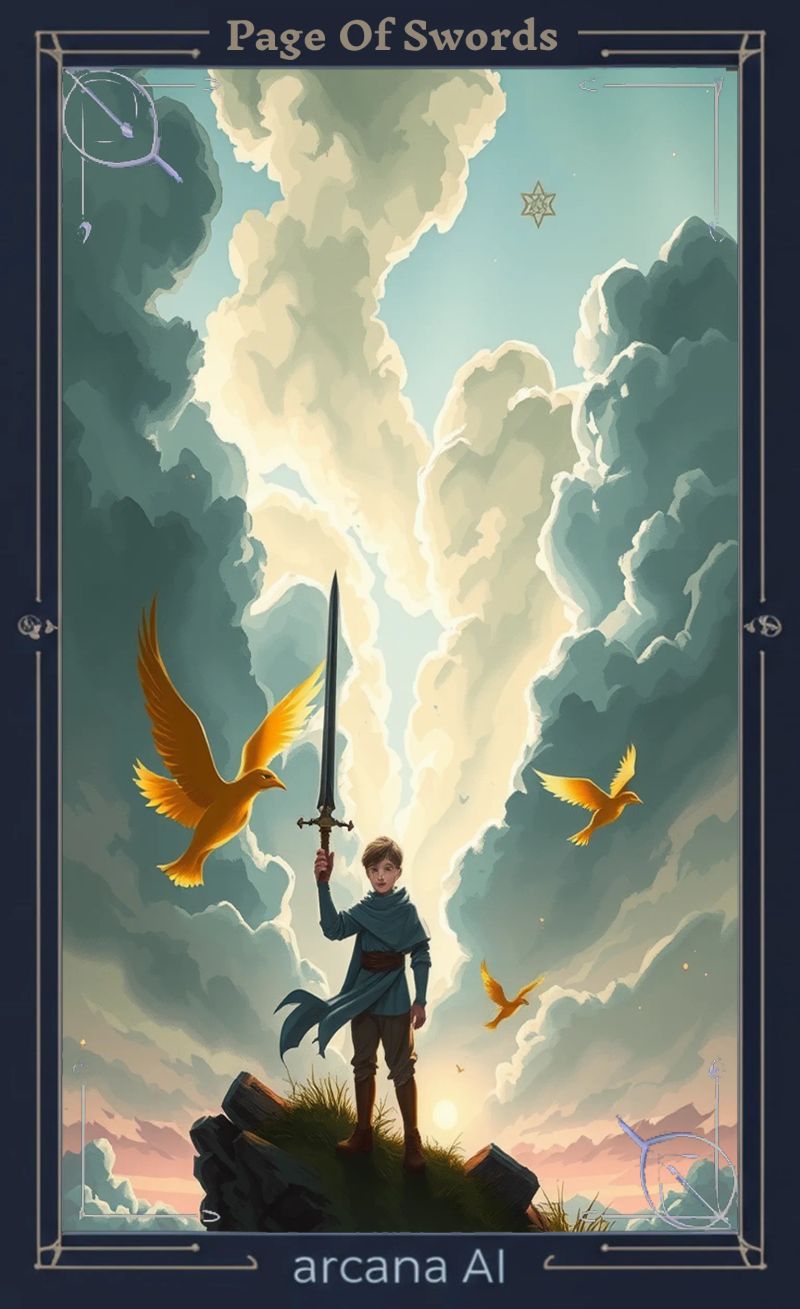
Position in the Tarot Deck
Minor Arcana - Page of Swords (Card 60 of 78)
The Page of Swords stands as the sharp, vigilant observer within the suit of Swords. The Swords govern the mental landscape, logic, truth, communication, and ethical boundaries, corresponding to the element of Air. As the first court rank in this intellectual suit, the Page embodies the early awakening of the critical intellect: insatiable curiosity, analytical vigilance, quick investigative wit, and an instinct to question established dogmas.
Card Archetype and Primal Energy
Esoterically, the Page of Swords is attributed to the Earth of Air, representing the physical application of thought, the recording of data, research, messaging, and investigative reporting. It represents intellect made practical and observant in everyday reality.
Psychologically, this card corresponds to the Jungian archetype of the Truth Seeker and the initial development of the Thinking function. This mental posture seeks clarity above sentimental comfort. It operates like an alert scout standing on a windy promontory, scanning the terrain for inconsistencies, hidden motives, and unexamined assumptions. When balanced, this archetype provides intellectual honesty, fearlessness in discourse, and swift learning capacity. When unintegrated, it degenerates into paranoia, petty argumentativeness, and detached cynicism.
Upright Meaning
When the Page of Swords appears upright in a tarot reading, it brings mental alertness, fresh intellectual projects, clarifying conversations, and honest evaluation. It encourages you to speak up, ask penetrating questions, and investigate facts before drawing conclusions.
Key Themes:
- Insatiable curiosity, investigative research, and active learning
- Vigilance, discernment, and clear boundary setting
- Direct, candid communication and decisive clarity
- Constructive critique and intellectual independence
Love and Relationships: In romantic readings, the Page of Swords points to relationships characterized by lively intellectual banter, mental stimulation, and candid dialogue. This card can indicate a partner who values honesty above diplomatic flattery, someone who prefers discussing issues directly rather than letting resentment simmer. For developing connections, it counsels clarity of intentions and direct questions. Avoid playing guessing games. For couples, it indicates a time to clear the air, address lingering misunderstandings, and establish explicit boundaries.
Career and Purpose: Professionally, this card marks an ideal time for research, investigative journalism, legal discovery, contract audits, software development, and academic writing. You possess the mental quickness to spot errors that others overlook. It advises you to remain curious, verify sources, and keep records of your communications. It is an excellent card for someone entering a competitive intellectual field or tackling technical training.
Introspection and Personal Growth: Internally, the Page of Swords asks you to observe your own internal narrative with detached curiosity. Challenge negative self-talk, verify whether your anxieties are based on demonstrable facts or imagined projections, and use intellectual discernment to free yourself from limiting beliefs.
Reversed Meaning and The Shadow Dynamic
When reversed, the Page of Swords emphasizes the distortion of intellectual vigilance into paranoia, defensive hostility, malicious gossip, or intellectual posturing without depth.
The shadow dynamic manifests in several characteristic behaviors:
- The Cynical Debater: Using sharp words as weapons, arguing simply to prove intellectual superiority, or picking fights over semantics while ignoring emotional realities.
- Paranoia and Espionage: Obsessively checking a partner’s social media, snooping through private messages, or assuming malicious motives behind innocent mistakes.
- All Talk, No Action: Proclaiming ambitious plans and critiquing everyone else’s work while producing nothing substantial oneself due to fear of criticism.
To resolve the reversed state, practice mental discipline. Direct your analytical skills toward constructive problem-solving rather than surveillance or fault-finding. Speak truth with kindness, and learn to distinguish between genuine vigilance and chronic anxiety.
Symbolism and Visual Elements
Pamela Colman Smith’s illustration for the Rider-Waite-Smith deck captures a dynamic moment of intellectual tension and alert readiness:
The Ready Sword: A lithe young youth stands firmly on high ground, holding a long two-handed sword upright with both hands. His stance is dynamic: his body turns toward one side while his gaze looks sharply over his opposite shoulder, showing vigilance and readiness to defend against surprises.
Windblown Elements: Strong gusts of wind whip through the scene, tossing the youth’s hair and blowing his light purple tunic. In the sky above, wispy cirrus clouds scud rapidly, while a flock of birds flies in high formation. The wind and airborne birds emphasize the dominance of the Air element, indicating rapid thoughts, incoming messages, and mental turbulence.
The Elevated, Uneven Ground: The Page stands on elevated, rugged terrain with tufts of green grass. This high vantage point gives him a clear perspective over his surroundings, but the jagged rocks remind him that maintaining intellectual vigilance requires sure footing.
Attire and Colors: He wears a soft reddish-violet tunic over olive-yellow hose, combining intellectual passion with observational grounding. His posture conveys readiness: he is not in heavy armor, relying instead on agility, quick reflexes, and mental sharpness.
Historical Context and Associations
In the Hermetic Order of the Golden Dawn, the Page of Swords was titled the “Princess of the Rushing Winds; the Lotus of the Palace of Air.” This emphasizes the swift, unpredictable velocity of intellectual currents and spoken truth.
Astrological Correspondence: The Page of Swords rules the quadrant of Air signs: Gemini, Libra, and Aquarius. It blends the quick adaptability of Gemini, the balanced objective justice of Libra, and the visionary iconoclasm of Aquarius.
Elemental Composition: Earth of Air. Earth provides a tangible structure for thoughts, manifesting as written words, contracts, software code, and factual evidence.
Card Combinations and Spread Positions
With The Magician: Indicates exceptional communication skills, brilliant rhetoric, and the power to translate complex ideas into persuasive messaging.
With The Moon: Highlights hidden information coming to light, the need to separate paranoia from genuine intuition, and uncovering deception.
With The Three of Swords: Signals painful verbal revelations, necessary but difficult truths, or constructive critique that stings before it heals.
With The King of Swords: Represents a mentorship dynamic where experienced wisdom guides youthful intellectual curiosity toward disciplined mastery.
In Past Position: Indicates a past period of intense study, sharp skepticism, or an intellectual awakening that shaped your current perspectives.
In Present Position: Demands that you verify information, communicate directly, and protect your personal boundaries without hesitation.
In Future Position: Predicts incoming communications, contracts to review, or the need to defend your principles with clear logic.
Frequently Asked Questions
What does the Page of Swords mean in a tarot reading?
The Page of Swords represents mental agility, curiosity, clear communication, and vigilant observation. It indicates a period of learning, gathering facts, and speaking truth without fear.
Is the Page of Swords a yes or no card?
In a yes or no reading, the Page of Swords generally leans toward Yes, with conditions. It requires thorough research, clear communication, and careful reading of the fine print before proceeding.
What does the Page of Swords indicate in a love reading?
In love, it indicates intellectually stimulating conversations and honest boundaries, but warns against overanalyzing feelings, snooping on partners, or turning emotional discussions into forensic debates.
How does the Page of Swords handle conflict?
The Page handles conflict through logic, direct questioning, and sharp verbal expression. It seeks clarity and factual truth rather than emotional diplomacy.
Explore More
Discover deeper insights about this card by using the Arcana AI app for personalized tarot readings.