Relationship Tarot Spread: 6-Card Layout & Reading Guide
A comprehensive six-card layout exploring both partners' perspectives, the relationship's strengths and challenges, and the path forward. Perfect for understanding romantic connections and partnership dynamics.
You're Not Lost. You're Listening.
Your intuition led you here. Let's see what the cards want you to know.
One profound reading daily • No signup • Save your insights with a free account
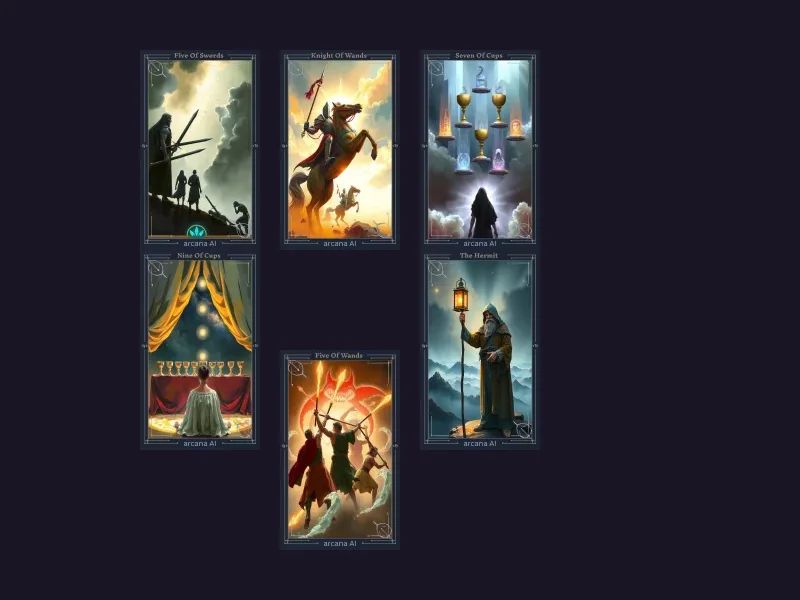
Spread Layout: 6 card(s)
Card Positions
Your Energy & Stance
Your current emotional mindset, expectations, and personal patterns brought into the partnership.
Partner Energy & Stance
Your partner's perspective, emotional availability, and current stressors affecting their involvement.
Shared Foundation
The underlying values, mutual attraction, and emotional bond holding the relationship together.
Friction or Growth Edge
Active communication barriers, unmet expectations, or friction points requiring conscious attention.
What You Contribute
The practical, emotional, or grounding resources you offer to support the union.
What They Contribute or Need
What your partner brings to the table or the specific support they require from you.
The relationship tarot spread is a six-card diagnostic layout designed to map interpersonal dynamics between two people. By separating each partner’s mindset from the shared bond, the spread pinpoints where communication flows naturally and where unspoken friction causes misinterpretation.
       [ 1. You ]               [ 2. Partner ]
  (Your Current Energy)      (Their Current State)

       [ 3. Foundation ]        [ 4. Friction ]
      (Shared Bond Core)     (Growth Edge / Tension)

       [ 5. You Give ]          [ 6. They Give ]
     (Your Contribution)      (Their Contribution)
Why Relational Spreads Require a Distinct Approach
Solo readings reflect internal thoughts and personal choices. Relationship readings introduce an autonomous second party whose feelings, history, and defenses operate outside your control. When reading for two, cards do not assign blame. Instead, they chart how two nervous systems interact under pressure.
Readers often assume that a difficult card in a partner’s position means bad intentions. In practice, cards like the Nine of Swords or Four of Cups usually reflect exhaustion, defensive retreat, or private stress rather than malice.
Step-by-Step Layout Instructions
Set aside fifteen minutes without phone notifications or distractions. Sit with your deck, take a slow breath, and ground your attention in your body.
- Shuffle the cards while holding a clear, open intention. Rather than asking “Do they love me?”, ask “What is the true condition of our connection right now?”
- Cut the deck into three stacks with your non-dominant hand, then restack them in whatever order feels natural.
- Draw six cards and place them face down following the two-by-three grid:
- Position 1 (Top Left): Your current state of mind and emotional posture.
- Position 2 (Top Right): How your partner feels, behaves, and shows up.
- Position 3 (Middle Left): The central foundation linking both of you together.
- Position 4 (Middle Right): The obstacle, trigger point, or growth lesson.
- Position 5 (Bottom Left): What you are bringing to the table.
- Position 6 (Bottom Right): What your partner provides or needs in return.
- Turn the cards over in pairs: first 1 and 2, then 3 and 4, then 5 and 6.
Positional Interpretations and Nuance
Positions 1 & 2: Individual Postures
Look at the balance between these two cards. If one side shows a fiery Wand while the other draws a reserved Pentacle, the reading reveals an energy mismatch. One person wants fast momentum; the other requires deliberate, predictable pace. Neither is wrong, but their tempos create friction.
When a Major Arcana lands on one side and a Minor Arcana on the other, one partner is going through a defining life initiation while the other navigates day-to-day routines. Recognizing this disparity prevents taking moodiness personally.
Positions 3 & 4: Foundation and Growth Edge
Position 3 clarifies why you chose each other. Even in moments of distress, this card displays the core anchor, whether mutual loyalty, shared vision, or emotional intimacy.
Position 4 shows where the gears grind. If Swords appear here, the issue centers around language, tone, or assumptions. If Cups dominate this spot, unresolved emotional baggage or boundary leaks require honest boundaries.
Positions 5 & 6: The Exchange
A healthy partnership does not require identical gifts. One person might supply emotional warmth through the Queen of Cups while the other delivers practical structure through the King of Pentacles. Friction happens when one person feels their contribution is unnoticed or unreciprocated. Compare these two positions to verify whether giving and receiving remain in workable balance.
Reading Elemental Clashes in Partnerships
Elemental dynamics explain why two good people struggle to communicate:
- Fire and Water: Fire seeks immediate passion and excitement, while Water needs emotional safety and deep conversation. Without patience, Fire scorches Water’s sensitivity, and Water dampens Fire’s enthusiasm.
- Air and Earth: Air analyzes everything rationally and wants to discuss hypotheses. Earth asks what practical difference it makes today and looks for tangible receipts.
- Cups and Swords: When emotional expression collides with cold logic, arguments escalate quickly. The Cups reader feels invalidated, while the Swords reader feels overwhelmed by subjective reactions.
Difficult Cards in Love Readings
Drawing heavy cards in a love spread can rattle your confidence, but context changes everything:
The Tower in Position 4 points to an unsustainable illusion. A hidden issue is coming out into the open, which forces necessary honesty before the relationship can heal.
The Three of Swords in Position 1 or 2 rarely means infidelity. More frequently, it emphasizes old grief or defensive hurt bleeding into the current partnership. Acknowledging this pain stops partners from attacking each other to defend old wounds.
The Devil warns against mutual codependency, unspoken expectations, or turning a partner into your only source of self-worth. It serves as a reminder to reclaim personal autonomy.
Ethical Boundaries in Love Readings
Reading tarot about someone else requires self-restraint. Keep these ethical rules in mind:
- Never treat the cards as a surveillance camera into your partner’s secrets.
- Focus on how you respond to your partner rather than trying to fix or alter their behavior.
- Respect that free will always overrides card predictions. No tarot spread dictates your future choices.
Example Questions
- What underlying dynamic is currently shaping our communication?
- Where are our expectations misaligned in this relationship?
- How can we work through our present friction constructively?
- What strengths can we lean on during this transition?
Related Spreads
Basic Three-Card Relationship Tarot Spread
A streamlined three-card tarot layout mapping your energy, your partner's perspective, and the living dynamic of the relationship itself for immediate clarity.
Heart Opener Tarot Spread: Vulnerability Readiness & Grief Release
A 6-card emotional healing spread designed to assess vulnerability readiness, release lingering grief, and realign the heart center with safety and boundaries.
The Lovers Tarot Spread: Spiritual Union, Karma & Soul Contracts
A 7-card spiritual love spread examining soul contracts, karmic growth edges, and the distinction between destined soulmates and addictive attachments.
Try This Spread
Experience this spread with Arcana AI
Get the AppFrequently Asked Questions
Can I do a relationship spread without my partner knowing?
You can read on how you perceive the relationship and examine your own reactions. Reading to pry into someone else's private thoughts without consent often yields projections rather than truth. Keep your focus on your side of the dynamic.
What should I do if a difficult card like The Tower appears?
Challenging cards highlight areas under stress, not a guarantee of a breakup. A card like The Tower often points to an outdated assumption or unspoken tension that must collapse so honest communication can take its place.
How often should you perform a relationship tarot spread?
Allow four to six weeks between full readings on the same relationship. Relational patterns shift slowly, and pulling cards daily for the same dilemma tends to cause second-guessing and anxiety rather than clarity.
Does this spread only work for romantic couples?
The six positions apply directly to close business partnerships, creative collaborations, and friendships where mutual expectations and shared responsibilities interact.