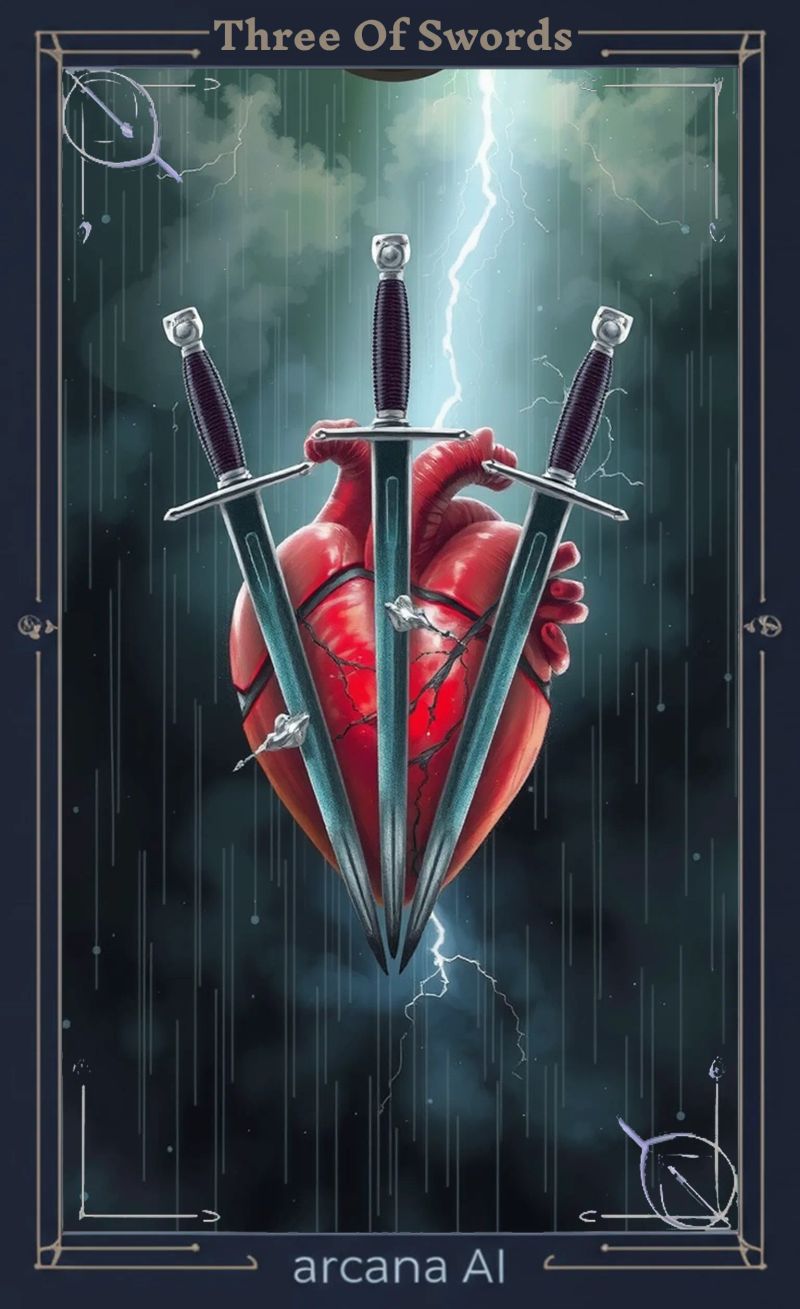
The Three of Swords stands as the tarot’s most poignant and unmistakable emblem of heartbreak, emotional sorrow, painful clarity, and the piercing realization of hard truths. In Pamela Colman Smith’s striking design, there are no human figures to distract from the raw emotional archetype: a vibrant red heart floats suspended in the sky, pierced symmetrically by three cold steel blades beneath dark storm clouds and driving rain. The Three of Swords does not depict physical assault, but the psychological pain that occurs when the cold, analytical faculty of the mind (Swords) cuts through the tender illusions of the heart. It reminds you that while sorrow is acutely painful, grief is an indispensable agent of psychological maturation: by shattering false expectations, it carves out the soul’s capacity for deeper compassion, discernment, and authentic healing.
Position in the Deck
Minor Arcana - Suit of Swords, Card 3. Following the mental truce and blindfolded isolation of the Two of Swords, the Three represents the painful puncture of psychological defense mechanisms: the truth is revealed, emotional defenses collapse, and the sorrow must be directly felt.
Upright Meaning
When the Three of Swords appears upright, it acknowledges a sharp emotional wound, betrayal, rejection, or painful separation. You may have recently received distressing news, discovered a difficult truth, or experienced a bitter falling out with someone you trusted. This card does not appear to torment you, but to validate your grief. It tells you that your pain is real, justifiable, and worthy of acknowledgment. It counsels against suppressing your sorrow with toxic positivity or intellectual denial. Allow yourself to mourn what has been lost, knowing that the storm clouds will eventually exhaust their rain, leaving your emotional vision clearer than before.
Love and Relationships
In relationship readings, the Three of Swords upright is the classic marker of romantic heartbreak, painful arguments, infidelity, or necessary separation. If you are experiencing marital conflict or dating strain, this card indicates that unaddressed wounds have reached a breaking point. Illusions are shattered, exposing incompatible values, broken promises, or emotional alienation.
If you are moving through the aftermath of a breakup, the card advises you to honor your grief fully rather than rushing into a rebound romance to numb the ache. Suppressing sorrow only drives it into the subconscious, where it calcifies into bitterness. By allowing yourself to weep, talk with trusted confidants, and process the hurt, you cleanse your heart, ensuring that future relationships will not be poisoned by unresolved ghosts.
Career and Finances
In career matters, the Three of Swords points to professional disappointment, contract cancellations, harsh performance reviews, or sudden layoffs. You may discover that a business partner has acted behind your back, or that a company restructuring has eliminated your role. It can also signify a toxic work culture where harsh criticism and sharp tongues undermine employee morale.
Financially, this card indicates distressing financial news, unexpected expenses, or legal disputes over property and contracts. Avoid making emotional investment decisions in the immediate wake of financial loss. Seek objective legal or accounting advice, audit your contracts carefully, and focus on damage control and practical recovery.
Spiritual Practice and Personal Growth
Spiritually, the Three of Swords represents the archetype of the Wounded Healer. Suffering has a profound capacity to tenderize the human heart, dissolving intellectual arrogance and fostering unconditional empathy for the suffering of others. In contemplative practice, this card invites you to practice the Buddhist art of tonglen: breathing in the sharp reality of pain and breathing out compassionate healing for all beings who have ever suffered heartbreak.
Reversed Meaning
When the Three of Swords appears reversed, the sharpest agony of heartbreak begins to soften, signaling emotional recovery, forgiveness, and the gradual release of long-held resentments.
Warning Signs and Blocks
Reversed, this card can signify two distinct trajectories depending on surrounding cards. Positively, it heralds the dawn after the storm: you are finally ready to pull out the swords, forgive those who wounded you, and rebuild your life with hard-won wisdom. Negatively, it warns of prolonged, chronic suffering: nursing old grievances for years, refusing to let wounds heal, and defining your entire identity around past victimhood.
Love and Relationships
In romance, the Three of Swords reversed indicates healing after a painful breakup or genuine reconciliation after severe relationship conflict. Couples who have endured infidelity or major betrayals may begin the rigorous work of couples therapy, honest confession, and rebuilding trust on a foundation of total transparency. If reconciliation is impossible, it signals peaceful closure: releasing anger toward an ex-partner and wishing them well from a healthy emotional distance.
Career and Finances
Professionally, the reversal signals recovering from workplace disappointment or finding a superior job following an unfair dismissal. The bitterness of a failed startup or canceled contract recedes, replaced by renewed focus and strategic clarity. Financially, it marks the resolution of contentious financial disputes, settling legal claims, and moving forward with realistic fiscal discipline.
Spiritual Stagnation
Spiritually, the Three of Swords reversed warns against spiritual cynicism and emotional armoring. When you conclude that love is dangerous and people are untrustworthy, you encase your heart in stone, cutting yourself off from both pain and joy. The card urges you to soften your armor, forgive your past naivety, and dare to trust life again.
Psychological Archetype and Shadow Dynamics
Jungian Archetype: The Wounded Heart and Necessary Suffering
In Jungian psychology, the Three of Swords represents the necessary psychological crisis where the ego’s naive fantasies of omnipotence and romantic perfection are pierced by the harsh reality of the Shadow and collective mortality. Carl Jung emphasized that there is no birth of consciousness without pain. The piercing of the heart by the swords of discrimination strips away childish illusions, initiating the soul into mature psychological individuation.
Shadow Dynamics: The Bitter Resentful and the Chronic Victim
The shadow of the Three of Swords unfolds across two destructive patterns:
- The Incurable Resentful: Unable to metabolize grief, the individual converts sorrow into venomous cynicism, weaponizing their past pain to justify cruel behavior toward current partners and friends.
- The Professional Martyr: The individual clings to past heartbreak as a badge of honor, unconsciously sabotaging opportunities for joy because their identity is completely dependent upon being a victim of tragedy.
Healing this shadow requires understanding that pain is an event, but suffering is a choice. Releasing the swords allows the heart’s natural regenerative tissues to knit together, leaving behind resilient scars of wisdom.
Symbolic Elements
- The Floating Red Heart: The central anatomical heart symbolizes authentic feeling, love, vulnerability, and the core emotional self. Its suspension in the open sky emphasizes that emotional suffering is a universal human experience.
- The Three Steel Swords: The swords pierce the heart from three distinct angles: two crossing diagonally and one plunging vertically straight through the center. They represent analytical intellect, harsh truth, and decisive words piercing emotional illusions.
- The Grey Storm Clouds: Dense, billowing storm clouds fill the upper atmosphere, representing the turbulent emotional atmosphere of grief, confusion, and psychological distress.
- The Torrential Rain: Falling in vertical sheets behind the heart, the rain symbolizes emotional tears, sorrow, and the natural cleansing mechanism of grief that washes away past illusions and fertilizes the soil of future renewal.
- The Absence of Human Figures: Unlike most Minor Arcana cards, no human characters appear, emphasizing that grief and heartbreak are archetypal forces that transcend individual personalities.
Historical and Esoteric Context
In the historic Tarot de Marseille, the Three of Swords depicted three curved scimitar-like blades crossing within an intricate floral wreath, symbolizing tension and mental struggle without the visceral imagery of a pierced heart.
In the Hermetic Order of the Golden Dawn, the card was titled “The Lord of Sorrow” and assigned to the second decan of Libra, ruled by Saturn. This astrological combination is extraordinarily revealing: Saturn (karma, limitation, structure, time, and grief) operates within Libra (the sign of relationship, balance, harmony, and marriage). When Saturn’s harsh reality meets Libra’s romantic ideals, illusions inevitably shatter. Pamela Colman Smith drew directly upon the fifteenth-century Sola Busca Tarot (specifically the Three of Swords depicting a heart pierced by three daggers) to create the modern masterpiece of emotional symbolism.
Card Interactions
- Two of Cups: The Two of Cups represents the sweet exchange of reciprocal love; the Three of Swords represents the painful rupture of that same sacred vessel.
- Four of Swords: The Three of Swords represents the acute moment of emotional injury; the Four of Swords provides the subsequent hospital bed, quiet sanctuary, and meditative retreat needed to heal the wound.
- Ten of Swords: The Three of Swords pierces the emotional heart; the Ten of Swords represents the ultimate, irrevocable conclusion of the entire cycle of mental suffering, ending the ordeal once and for all.
Elemental and Astrological Correspondences
- Astrological Attribution: Saturn in Libra (Second Decan of Libra, 10° to 20° Libra), where the heavy karmic discipline of Saturn challenges the idealized relational balance of Libra.
- Elemental Affinity: Air (intellectual clarity, spoken words, truth, and mental perception).
- Kabbalistic Sephirah: Binah in Yetzirah (Understanding in the World of Formation), the sorrowful mother who gives birth to form through necessary limitation and pain.
- Esoteric Title: The Lord of Sorrow.
Esoteric Meanings
Esoterically, the Three of Swords teaches that the heart must break open rather than break down. Sufi mystic Rumi wrote, “The wound is the place where the Light enters you.” When human attachments and romantic illusions are pierced by truth, the soul awakens to an indestructible spiritual love that does not depend upon fluctuating earthly circumstances.
Contemplative Journaling Prompts
- What painful truth have I been avoiding admitting to myself because I fear the grief that will follow?
- How can I create a safe, compassionate space to feel and release sorrow without judging myself as weak?
- Am I clinging to old grievances and using past heartbreak as an excuse to avoid vulnerability today?
- What profound wisdom or empathy has my past suffering granted me that I can now offer to others?
Frequently Asked Questions about the Three of Swords
What does the Three of Swords mean in a love reading?
Upright, the Three of Swords indicates heartbreak, painful emotional truths, betrayal, or separation. It highlights conflicts that have reached a breaking point and advises processing grief honestly. Reversed, it signifies healing from past heartbreak, forgiving an ex-partner, or beginning the journey of emotional recovery.
Is the Three of Swords a ‘yes’ or ‘no’ card?
The Three of Swords is an unequivocal NO. It indicates that the path ahead is filled with sorrow, emotional conflict, or painful realizations, advising you to reconsider your plans and protect your emotional health.
Why is there no person on the Three of Swords card?
The absence of a human figure emphasizes that heartbreak and grief are universal archetypal experiences. Sorrow is not personal punishment; it is an inevitable condition of human existence that visits every soul, teaching compassion and emotional depth.
Does the Three of Swords always mean a breakup?
Not necessarily. While it often accompanies breakups, it can equally signify a painful conversation where partners finally express long-suppressed hurts, uncovering a difficult truth that must be acknowledged before genuine healing can occur.