Self-Love Tarot Spread: Shadow Work & Inner Child Healing
A grounding five-card layout designed to move past superficial self-care into real self-compassion, shadow integration, and inner child reconciliation.
The Answers You Seek Are Already Within You
AI-powered tarot to help you find clarity when you need it most.
Daily wisdom at your fingertips • Zero commitment • Deepen your practice with your free account
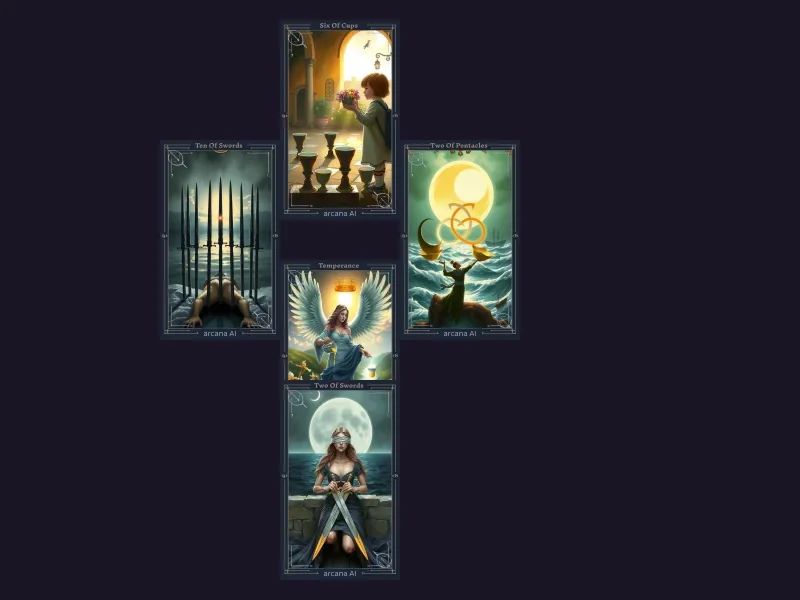
Spread Layout: 5 card(s)
Card Positions
Current Self-Perception
Reveals your active internal narrative and subconscious self-image without filters, exposing how you relate to your own emotional state right now.
Inherent Strengths & Gifts
Highlights natural capacities, emotional resilience, and authentic qualities you frequently downplay or take for granted.
The Shadow & The Critic
Pinpoints where self-criticism, unprocessed shame, or protective defense mechanisms are asking for compassionate attention rather than rejection.
The Inner Child's Voice
Uncovers what your younger, vulnerable self needs most right now, safety, creative play, emotional validation, or firm boundaries.
Path to Active Self-Compassion
Provides concrete behavioral guidance on how to treat yourself kindly today, translating emotional insight into physical care.
Moving Beyond Commercial Self-Care
Popular culture tends to reduce self-care to hot baths, scented candles, and forced optimism. Those rituals are pleasant, but they rarely soothe the sharp internal voice that tells you that you are falling behind, falling short, or asking for too much.
Real self-love is an act of honest psychological repair. It requires looking at the parts of your personality that embarrass you, the defense mechanisms you formed when you were young, and the harsh standards you use to evaluate your worth.
The 5-card Self-Love Spread is built to support that deeper work. It treats tarot as a mirror for your subconscious, helping you identify where your inner critic is running unchecked, what your younger self needs to feel secure, and how to practice active self-compassion in daily life.
                  ┌───────────────┐
                  │   [ Pos 1 ]   │
                  │ Current Self  │
                  │  Perception   │
                  └───────┬───────┘
                          │
         ┌────────────────┴────────────────┐
         │                                 │
  ┌──────┴────────┐                 ┌──────┴────────┐
  │   [ Pos 2 ]   │                 │   [ Pos 3 ]   │
  │   Inherent    │                 │  The Shadow   │
  │   Strengths   │                 │  & The Critic │
  └───────────────┘                 └───────────────┘
         │                                 │
         └────────────────┬────────────────┘
                          │
                  ┌───────┴───────┐
                  │   [ Pos 4 ]   │
                  │ Inner Child's │
                  │     Voice     │
                  └───────┬───────┘
                          │
                  ┌───────┴───────┐
                  │   [ Pos 5 ]   │
                  │ Active Path   │
                  │ to Compassion │
                  └───────────────┘
The 5 Card Positions Explained
Position 1: Current Self-Perception
This card reflects the story you are currently telling yourself about who you are and what you deserve. Pay close attention to whether the imagery feels constricted or expansive. If you draw the Eight of Swords, your perception is dominated by imagined helplessness; if you draw The Star, you are finally allowing yourself to trust your path.
Position 2: Inherent Strengths and Natural Gifts
Most people have a blind spot for their own gifts. When you do something effortlessly, whether it is holding space for a friend, noticing small patterns, or staying calm during logistical chaos, you assume anyone could do it. Position 2 emphasizes qualities you overlook, giving you permission to value them without apology.
Position 3: The Shadow and the Inner Critic
This card represents the vulnerable point where you tend to turn against yourself. It illuminates internalized guilt, perfectionism, or the coping habits you lean on when feeling threatened. Reading this card with compassion is the core turning point of the spread.
Position 4: The Inner Child’s Voice
Beneath adult responsibilities and professional titles lies the younger self who learned early which feelings were safe to show and which had to be hidden to maintain approval. Position 4 asks: What does that young self need right now? Is it permission to be messy, assurance that danger has passed, or simple creative delight?
Position 5: The Path to Active Self-Compassion
Insights mean little if they stay trapped in your head. Position 5 gives you a tangible behavior to practice over the coming days. It translates emotional discoveries into physical boundaries, somatic rest, or direct conversations.
Integrating Shadow Work with the Inner Critic
When difficult cards like The Devil, Five of Cups, or Nine of Swords appear in Position 3, an untrained instinct is to feel dismayed. You might worry that the cards are scolding you or verifying your worst insecurities.
Shadow work approaches these archetypes from a completely different perspective:
- Every defensive habit started as a protector: An inner critic that tells you “You aren’t ready to present this project” is not trying to hurt you. It is a primitive psychological defense trying to protect you from the humiliation of public failure. When you understand that its intent is protective, you can thank it for its vigilance while refusing to follow its advice.
- Expose the unacknowledged contract: Notice if the card in Position 3 reveals a transactional belief, such as “I am only worthy of love if I never make an inconvenient mistake.”
- Dialogue instead of exile: When you try to crush or silence your self-doubt, it grows louder. Speaking to the card directly softens the tension: “I see that you are terrified of being rejected. I am the adult now, and I can handle disappointment without collapsing.”
Inner Child Healing Prompts
Position 4 speaks directly to the tender, emotional core of your psychology. When interpreting the card in this position, sit quietly with the imagery and use these reflection questions:
Exploring the Core Need
- Look at the figure in the card: does this figure look safe, hurried, lonely, or playful?
- How old do you feel when you gaze at this image?
- What was happening in your life around that age? Did you feel seen, or did you feel forced to grow up quickly?
The Inner Dialogue Exercise
Write a letter from your adult self to the archetype in Position 4:
- “I acknowledge that you were overwhelmed by [specific feeling or childhood dynamic].”
- “You do not have to carry the burden of keeping everyone else happy anymore.”
- “Today, I am going to protect our peace by [specific boundary shown in Position 5].”
When you finish writing, place your hand over your chest, breathe slowly, and let your body absorb the reassurance that you are safe in your present circumstances.
Grounded Self-Compassion Affirmations by Suit
Standard positive affirmations often feel hollow because they demand that you jump straight from distress to glowing bliss. These targeted affirmations acknowledge difficult realities while gently establishing self-worth:
Cups: Emotional Reality
- Theme: Processing grief, emotional sensitivity, and relationship boundaries.
- Affirmation: “My feelings do not need to be convenient to be valid. I allow myself to experience grief or longing without rushing to fix it.”
- Ideal for: Five of Cups, Eight of Cups, Ten of Cups reversed.
Pentacles: Somatic and Physical Worth
- Theme: Bodily exhaustion, material comparison, and imposter feelings.
- Affirmation: “My worth is not measured by my productivity. My body deserves rest simply because it is alive, not as a reward for burnout.”
- Ideal for: Five of Pentacles, Four of Pentacles, Nine of Pentacles reversed.
Swords: Calming Mental Storms
- Theme: Hyper-criticism, catastrophic thinking, and obsessive overanalysis.
- Affirmation: “I can observe an anxious thought without treating it as a prediction. My mind is attempting to protect me, but I am in charge of my choices.”
- Ideal for: Nine of Swords, Eight of Swords, King of Swords reversed.
Wands: Creative Autonomy and Vitality
- Theme: Impatience, people-pleasing, and fear of taking up space.
- Affirmation: “I do not need to shrink my enthusiasm to keep others comfortable. It is safe for me to desire what I desire.”
- Ideal for: Nine of Wands, Ten of Wands, Seven of Wands.
Step-by-Step Layout Instructions
Preparation and Grounding
Find a quiet room where you will not be interrupted for twenty minutes. Light a candle or pour a cup of tea. Take three deep breaths, releasing tension from your neck and shoulders. Clear your deck thoroughly with an overhand shuffle, keeping your focus on honest self-inquiry rather than seeking praise.
Drawing and Layout
- Draw Card 1 and place it near the top center: Current Self-Perception.
- Draw Card 2 and place it to the left below Card 1: Inherent Strengths and Gifts.
- Draw Card 3 and place it to the right below Card 1: The Shadow and the Inner Critic.
- Draw Card 4 and place it directly beneath the center: The Inner Child’s Voice.
- Draw Card 5 and place it at the base: The Path to Active Self-Compassion.
Synthesizing the Reading
Observe the dialogue between Card 2 (your strengths) and Card 3 (your shadow). Notice how the strength in Card 2 can be used as the medicine to soothe the wound in Card 3. Finally, look at Card 5: what single, quiet action can you take within the next twenty-four hours to honor this guidance?
Somatic Integration and Aftercare
Introspective readings can occasionally leave you feeling emotionally tender or exposed. Before returning to your daily responsibilities, complete this short grounding routine:
- Hydrate and nourish: Drink a tall glass of cool water and eat a light, grounding snack like nuts or fruit.
- Physical movement: Stretch your spine, roll your wrists, and step outside for three minutes to look at natural light.
- Write down your single commitment: Take the action step from Position 5 and record it on a small index card. Keep it somewhere visible as a gentle touchstone for your day.
Treating yourself with kindness is an ongoing discipline, not a one-time revelation. Returning to this spread whenever you feel out of alignment gives you a safe, structured space to come home to yourself.
Example Questions
- What part of myself is asking for compassion right now?
- Where is my inner critic running on autopilot?
- What does my inner child need to feel safe today?
- How can I forgive myself for past missteps?
- What boundary will protect my emotional reserves?
Related Spreads
Daily Card Draw Tarot Practice
A focused single-card ritual for daily mindfulness and guidance. Features morning intention prompts, evening integration rituals, and habit-building frameworks.
Heart Opener Tarot Spread: Vulnerability Readiness & Grief Release
A 6-card emotional healing spread designed to assess vulnerability readiness, release lingering grief, and realign the heart center with safety and boundaries.
Inner Voice Tarot Spread: Ego vs. Intuition & Silencing External Noise
A 5-card discernment spread designed to distinguish fear-driven ego reactions from calm intuition, filter out external noise, and deepen inner trust.
One Card Tarot Spread: Focus Frameworks & Daily Practice
A single card delivers unclouded insight when paired with the right inquiry. Learn focus question frameworks, daily anchor routines, and clear interpretation methods.
Try This Spread
Experience this spread with Arcana AI
Get the AppFrequently Asked Questions
How does shadow work fit into a self-love tarot reading?
Genuine self-love requires acknowledging parts of yourself you normally hide, judge, or disown. When difficult cards appear in Position 3, they are not character flaws; they are protective parts guarding against past pain that need understanding rather than suppression.
What should I do if the reading brings up intense emotional discomfort?
Pause the reading and practice somatic grounding: place both feet flat on the floor, put a hand over your heart, and take slow, deep breaths. Acknowledge that the discomfort is simply an old emotional memory asking for validation, not a verdict on your current worth.
Can this spread help with harsh inner critics?
Yes. Position 3 directly targets the inner critic. Instead of fighting that voice, tarot helps you see what fear is driving it. Most harsh self-talk is an outdated survival strategy designed to prevent failure or rejection.
How often should I perform the Self-Love Spread?
Because this spread reaches into deeper emotional layers, once a month or during major life transitions is usually ideal. For weekly check-ins, a simpler one-card or three-card spread offers steady maintenance without emotional exhaustion.