One Card Tarot Spread: Focus Frameworks & Daily Practice
A single card delivers unclouded insight when paired with the right inquiry. Learn focus question frameworks, daily anchor routines, and clear interpretation methods.
The Answers You Seek Are Already Within You
AI-powered tarot to help you find clarity when you need it most.
Daily wisdom at your fingertips • Zero commitment • Deepen your practice with your free account
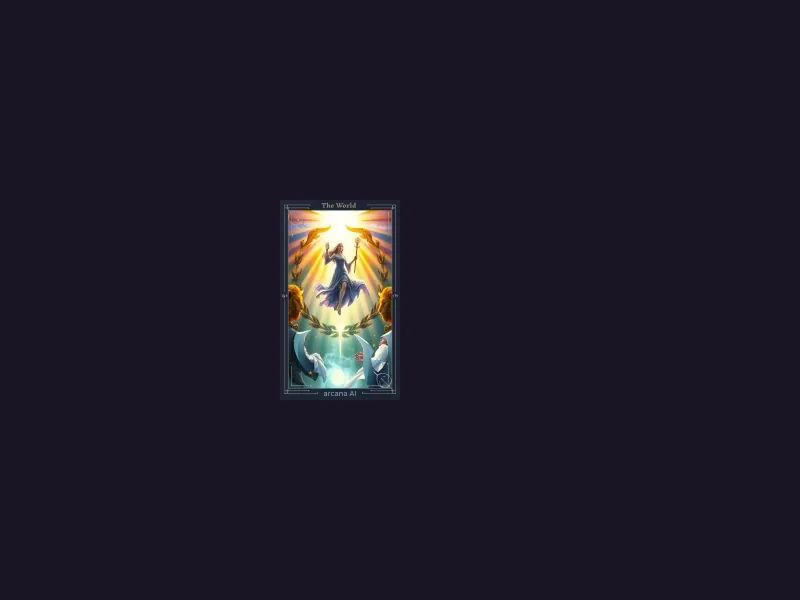
Spread Layout: 1 card(s)
Card Positions
The Focal Lens
The single card serves as an energetic anchor, psychological mirror, or direct directive. It strips away narrative clutter to spotlight the exact dynamic governing your question.
The Art of the Single Card
Pulling one card cuts through the noise. Multi-card spreads like the Celtic Cross offer narrative arcs and systemic context, but they can also tempt you to over-intellectualize, weaving elaborate stories instead of confronting direct truths.
A single card leaves nowhere to hide. It takes whatever situation you bring, a fraught conversation, a stubborn creative blockage, or general morning disorientation, and distills it down to an archetype, an emotional temperature, and an actionable stance.
To make a single card work, you need two things that many readers overlook: a tightly calibrated question and an anchor technique that keeps the card alive in your awareness long after you put the deck back on your shelf.
       ┌───────────────┐
       │               │
       │    [   I   ]   │
       │   The Focal   │
       │     Lens      │
       │               │
       └───────────────┘
  (One card: Pure clarity, zero clutter)
Daily Card of the Day Guidelines
Pulling a “card of the day” is the most common single-card exercise, yet people frequently abandon it after a few weeks because their mornings feel repetitive or the cards seem disconnect from their workday. You can avoid that plateau by treating the daily pull as an observational lens rather than a predictive forecast.
1. Shift from Prediction to Observation
Asking “What will happen to me today?” sets an unhealthy expectation. If you draw the Five of Pentacles, you spend the afternoon flinching at unexpected bills or minor inconveniences.
Instead, ask observational questions:
- “What attitude will help me find whatever comes up today?”
- “Where is my attention most likely to wander off course?”
- “What subtle dynamic should I observe without judging it?”
When you draw the Five of Pentacles under that lens, the card ceases to be a bad omen. It becomes an early warning system reminding you not to retreat into scarcity thinking when team meetings get stressful.
2. Time Your Draw Intentionally
Drawing a card when you are half-asleep while scrolling on your phone rarely creates insight.
Pick one consistent window:
- Morning grounding: Draw your card immediately after your morning coffee or journaling, before checking email or social feeds.
- Midday reset: Pull one card at lunch when the morning’s momentum has scattered your focus, asking “What reset do I need for this afternoon?”
- Evening reconciliation: Pull a card before sleep asking “What lesson did today deliver that I missed in the rush?”
Focus Question Frameworks
The quality of your single-card draw hinges entirely on how you frame your inquiry. Broad, passive questions yield hazy answers. Specific, agency-focused questions produce immediate clarity.
Here are four frameworks designed for single-card interpretation:
1. The Decision Clarity Framework
When you are wrestling with a crossroad and want immediate insight into your motivations, do not ask the deck to choose for you. Use one of these prompts:
- “What hidden fear is driving my hesitation here?”
- “What truth about this choice am I pretending not to know?”
- “What foundational standard must I refuse to compromise on?”
If you pull the Four of Pentacles on hesitation, your obstacle is not lack of information; it is the fear of losing control over the outcome.
2. The Emotional Check-In Framework
When you feel irritable, depleted, or disconnected from your usual drive, use a single card as a diagnostic mirror:
- “What unmet emotional need is asking for acknowledgement?”
- “What emotional defense mechanism am I running on autopilot?”
- “Where am I withholding gentleness from myself?”
A card like the Eight of Cups here tells you that emotional fatigue is coming from lingering in an exhausted dynamic longer than necessary.
3. The Creative and Professional Unblocking Framework
When facing writer’s block, project inertia, or workplace friction:
- “What creative assumption is suffocating this draft?”
- “What is the single highest-leverage task I can complete today?”
- “How can I bring cleaner boundaries to my current workload?”
Drawing the Knight of Swords reminds you to stop second-guessing outlines and execute a rough draft at full speed.
4. The Relational Temperature Framework
Before an important discussion, difficult boundary setting, or conflict resolution:
- “What emotional projection am I bringing into this conversation?”
- “What posture will best protect my peace while remaining open?”
- “What does the other person need from me that I have not been seeing?”
Drawing the Queen of Cups urges calm empathy and active listening without absorbing the other person’s volatile anxiety.
Quick Anchor Reflection Techniques
A card drawn at 7:00 AM does no good if you forget what it was by 9:30 AM. Use simple physical and cognitive anchors to keep the card active.
The Desk Anchor
Keep your card visible where you spend most of your day:
- Prop the physical card on a small wooden stand next to your computer monitor.
- If you use a digital app like Arcana, save the card artwork as your lock-screen wallpaper for the day.
- Place a physical sticky note below the card with one active question written on it (for instance: “Patience or panic?” if you drew Temperance).
The 60-Second Midday Glance
Set a subtle calendar reminder for 1:00 PM. Take exactly sixty seconds away from your screen to glance at your card:
- Notice your physiological tension: shoulders, jaw, breathing.
- Ask yourself: “Have I embodied this card this morning, or have I fallen into its shadow?”
- Take two deep exhales and step back into your afternoon with adjusted posture.
The Evening Reconciliation Loop
Before you close your journal or turn off the lights, spend two minutes reviewing your day against the card:
- Where did the archetype appear? (Often in an unexpected conversation or an unprompted email).
- How did recognizing the card alter your reaction?
- What does this teach you about the card’s real-world texture?
The Micro-Meditation Framework
A single card provides the perfect focal object for a five-minute contemplative reset. You do not need an elaborate altar or prolonged meditation session.
Step 1: Somatic Grounding (60 Seconds)
Place your feet flat on the floor. Hold the card between both palms. Take three steady breaths, extending each exhale longer than your inhale to engage your parasympathetic nervous system.
Step 2: Visual Immersion (2 Minutes)
Look directly into the artwork. Do not consult guidebooks or recite memorized bullet points. Instead, let your eyes drift across the composition:
- Which color dominates the background?
- What is the figure’s posture? Are they grounded, rushing forward, or turning their back?
- What landscape surrounds them? Is it barren rock, running water, or manicured gardens?
- Notice where your eyes catch first. That detail is your intuitive entry point.
Step 3: Intuitive Dialogue (2 Minutes)
Imagine the archetype in the card stepping into the room with you. Ask one question silently:
- “What do I need to release right now?”
- Listen for the first unforced sentence that surfaces in your mind. Write it down immediately in your notes app or journal without editing.
Major vs. Minor Arcana in Single Draws
When you only have one card in front of you, understanding whether you drew a Major or Minor card tells you what scale of experience you are dealing with.
| Card Type | Operational Meaning in a Single Draw | Recommended Action |
|---|---|---|
| Major Arcana | Archetypal turning point, profound psychological lesson, or overarching existential theme. | Slow down. Do not treat this as trivial daily trivia. Focus on inner alignment, surrender, or core belief shifts. |
| Minor Arcana (Wands) | Creative friction, willpower, physical vitality, motivation, or impending burnout. | Audit your energy expenditure. Initiate, defend your boundary, or rest your physical body. |
| Minor Arcana (Cups) | Relational dynamics, emotional currents, vulnerability, intuition, or unspoken feelings. | Check in with your emotional truth. Address lingering resentment or open space for connection. |
| Minor Arcana (Swords) | Mental clarity, communicative friction, anxiety loops, harsh boundaries, or intellectual strategy. | Examine your thoughts for cognitive distortions. Speak directly and eliminate ambiguous language. |
| Minor Arcana (Pentacles) | Practical resources, bodily health, finances, physical craftsmanship, or daily work routines. | Take tangible, physical action. Review your calendar, organize your workspace, or attend to your physical well-being. |
| Court Cards | An attitude you need to embody, a blind spot in your maturity, or an external person influencing the situation. | Ask: “How would this archetype handle my dilemma?” Embody their strengths while dodging their typical pitfalls. |
How to Read Reversals in a Single-Card Spread
When a single card arrives reversed, beginners often assume the reading has turned negative. In reality, a reversal in an isolated pull is simply an arrow directing your attention inward rather than outward.
Consider these three interpretive lenses for single-card reversals:
- Internal Processing: The energy of the card is operating beneath the surface. Upright Three of Swords points to sharp external communication or grief; reversed Three of Swords points to quiet, internal healing and the slow release of past pain.
- Resistance or Blockage: You are refusing to let the natural lesson unfold. Drawing an upright Strength encourages patience with yourself; drawing a reversed Strength warns that self-doubt and inner criticism are draining your stamina.
- Imbalance or Excess: You have pushed the card’s archetype past its healthy limit. Upright Magician represents skilled focus and agency; reversed Magician flags manipulation, scattered focus, or overpromising on commitments.
Addressing Difficult Cards Without Anxiety
Drawing The Tower, Death, Ten of Swords, or Three of Swords in a single-card pull can induce an instinctive spike of dread if you treat tarot as deterministic fortune-telling.
When a challenging card lands on your desk, remember:
- Tarot is diagnostic, not punitive: The card is not creating a crisis; it is giving a name to tensions that already exist in your subconscious.
- The archetype emphasizes relief points: The Tower does not predict disaster; it shows where defending a brittle pretense is costing you more energy than letting it crumble.
- Immediate reframing question: Whenever a heavy card appears, ask: “What truth here makes me freer once I accept it?”
A single card holds immense clarity when you give it your full attention. By establishing precise question frameworks, keeping physical reminders near your workspace, and maintaining an honest evening reflection loop, one card becomes an invaluable compass for your daily life.
Example Questions
- What mindset best serves my current objective?
- Where am I expending unnecessary friction right now?
- What underlying tone should I track through today's interactions?
- What perspective am I avoiding about this decision?
- Which inner resource is most available to me today?
Related Spreads
Daily Card Draw Tarot Practice
A focused single-card ritual for daily mindfulness and guidance. Features morning intention prompts, evening integration rituals, and habit-building frameworks.
Problem-Solution Tarot Spread
A focused two-card layout diagnosing the true root cause of an obstacle and identifying the most effective strategic action or mindset required to resolve it.
Two-Card Tarot Spread: Polarity Analysis & Card Dialogues
A focused two-card layout for resolving dilemmas, contrasting perspectives, and reading fluid dialogue between cards through polarity analysis.
Yes or No Tarot: 1-Card Guide & Meaning List | Arcana AI
A focused one-card layout designed for quick, direct answers to yes/no questions. Perfect for daily decisions, clarifying doubts, and gaining immediate guidance on specific situations.
Try This Spread
Experience this spread with Arcana AI
Get the AppFrequently Asked Questions
Can a one-card tarot reading answer complex life questions?
Yes. While a multi-card layout maps interlocking dynamics over time, a single card forces you to identify the core root cause or primary attitude needed right now. Formulating a precise, agency-oriented question prevents vague or ambiguous answers.
What is the difference between a daily card draw and a situational one-card reading?
A daily draw sets an observational lens for your entire day, serving as a contemplative anchor. A situational one-card reading targets an immediate, specific dilemma, such as an upcoming conversation or creative block, demanding actionable tactical clarity.
How do you read reversed cards in a single-card pull?
In an isolated draw, a reversed card usually signals internalized processing, resistance to the card's natural expression, or an excess of that card's archetype. It invites you to check where you are fighting reality or holding back necessary action.
What should you do if you pull a disruptive card like The Tower or Ten of Swords?
Avoid panic or fatalism. Disruptive cards highlight areas where unrealistic structures, burnout, or unhelpful assumptions need release. Treat the card as diagnostic guidance pinpointing where clinging to control creates unnecessary stress.