Seven-Day Tarot Spread: Weekly Energy Mapping & Planning Rhythm
A practical 7-card weekly layout mapping day-by-day energy flows, aligning calendar commitments with intuitive rhythms, and planning ahead with clarity.
You're Not Lost. You're Listening.
Your intuition led you here. Let's see what the cards want you to know.
One profound reading daily • No signup • Save your insights with a free account
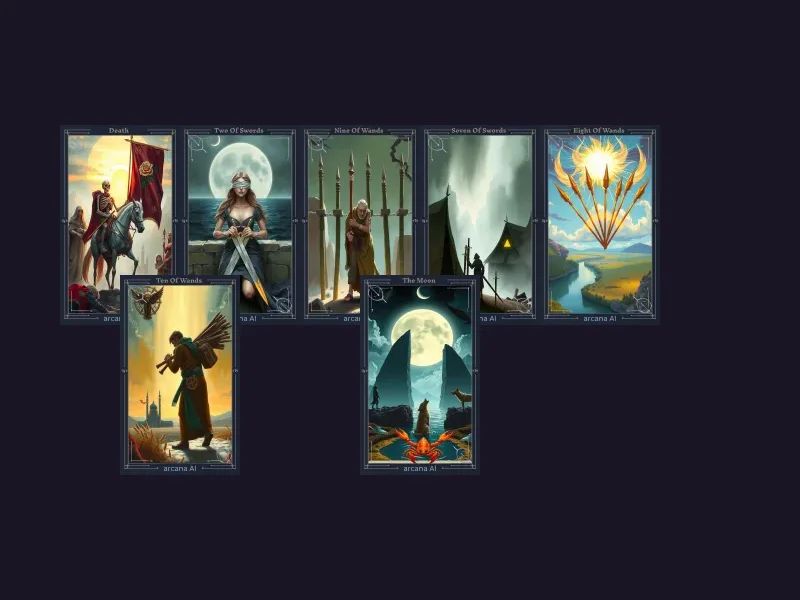
Spread Layout: 7 card(s)
Card Positions
Monday (Initiation & Tone)
The foundational energetic tone of the week, governing your initial focus, mindset, and threshold momentum.
Tuesday (Execution & Drive)
Building momentum, task execution, and early productivity developments following Monday's launch.
Wednesday (The Midweek Pivot)
The turning point of the week, highlighting necessary course corrections, creative pivots, or breakthrough insights.
Thursday (Capacity & Endurance)
Managing cumulative momentum, sustained effort, and deep-focus deliverables before the weekend transition.
Friday (Harvest & Decompression)
Wrapping up weekly deliverables, releasing workplace tension, and transitioning into personal and social time.
Saturday (Exploration & Play)
Unstructured creative expression, somatic rest, social connection, or autonomous personal passions.
Sunday (Reflection & Reset)
Integrating the week's lessons, resting your nervous system, and calibrating intentions for the upcoming cycle.
Reclaiming Your Weekly Rhythm
Most people approach weekly planning with a calendar and a to-do list, treating every day as an identical eight-hour container waiting to be packed with tasks. By Wednesday afternoon, unexpected friction emerges, energy crashes, and the meticulously organized schedule falls apart.
Human energy is cyclical, not mechanical. Some days bring sharp intellectual focus; others demand emotional reflection or physical rest. Trying to force high-stakes negotiations on an introspective day creates needless stress.
The Seven-Day Tarot Spread functions as an energetic weather forecast for your week. Instead of predicting external events like a crystal ball, it maps the underlying tone of each day from Monday through Sunday.
By identifying where momentum peaks, where friction concentrates, and when rest is mandatory, you can align your actual calendar commitments with your natural energetic capacity.
┌───────┐ ┌───────┐ ┌───────┐ ┌───────┐ ┌───────┐ ┌───────┐ ┌───────┐
│ Pos 1 │ │ Pos 2 │ │ Pos 3 │ │ Pos 4 │ │ Pos 5 │ │ Pos 6 │ │ Pos 7 │
│  Mon  │►│  Tue  │►│  Wed  │►│  Thu  │►│  Fri  │►│  Sat  │►│  Sun  │
│Launch │ │ Drive │ │ Pivot │ │Focus  │ │Harvest│ │ Play  │ │ Rest  │
└───────┘ └───────┘ └───────┘ └───────┘ └───────┘ └───────┘ └───────┘
  (Workweek Momentum)             (Midweek)       (Weekend Arc)
Monday to Sunday Energy Mapping
Each day of the week carries a distinct psychological role in your routine. Here is how to interpret each station:
1. Monday: Initiation and Setting the Tone
Monday establishes your threshold momentum. This card reveals the psychological posture you bring into the starting gate:
- Wands or Swords: A brisk, demanding start requiring swift communication or decisive prioritization.
- Cups or Pentacles: A steady, deliberate pace where settling into physical routines and emotional clarity takes precedence over rushed output.
2. Tuesday: Execution and Building Drive
By Tuesday, initial start-of-week meetings have concluded and real execution begins. Card 2 emphasizes where your stamina will naturally go. Look for operational cards like the Eight of Pentacles or Knight of Wands indicating high throughput.
3. Wednesday: The Midweek Pivot
Wednesday is the fulcrum of the workweek. It acts as a natural checkpoint where plans meet reality:
- If a challenging card appears here (such as the Five of Swords or Two of Swords), recognize that an assumption made on Monday will need rethinking.
- A card of clarity like the Ace of Swords signals breakthrough solutions to problems that were stalling early progress.
4. Thursday: Capacity and Sustained Effort
Thursday often brings the heaviest cognitive load. Fatigue begins to accumulate just as weekly deadlines arrive. Card 4 indicates your endurance reserves. If it shows an overburdened card like the Ten of Wands, proactively decline non-essential invites and protect your sleep.
5. Friday: Harvest and Transition
Friday bridges professional accountability and personal life. Card 5 reveals how cleanly you can close open loops. A celebratory card like the Three of Cups or Four of Wands signals social ease, while a cerebral Swords card indicates lingering administrative details requiring tidy closure.
6. Saturday: Autonomous Play and Exploration
Saturday is your unstructured canvas. Card 6 invites you to examine what your creative and physical self genuinely craves: restorative solitude (The Hermit), spontaneous adventure (The Fool), or shared community warmth (The Sun).
7. Sunday: Reflection and Systematic Reset
Sunday completes the cycle. Card 7 provides integration medicine, helping you digest the lessons of the past six days before turning attention to the next horizon.
The 15-Minute Sunday Planning Rhythm
To make this spread genuinely useful, do not leave it on your altar. Integrate it directly into your calendar using this straightforward fifteen-minute workflow:
- Draw and photograph (3 minutes): Lay out the seven cards in a clean horizontal line. Snap a clear photo with your phone for easy daily reference.
- Scan the weather (3 minutes): Look at the spread as a single panoramic landscape. Which day looks most demanding? Which day looks most spacious?
- Calibrate your digital calendar (6 minutes):
- If Tuesday has the Knight of Swords, schedule your most demanding presentations or technical work for that day.
- If Wednesday has the Four of Swords or The Moon, clear evening commitments and avoid scheduling high-conflict discussions.
- If Friday shows the Ten of Cups, keep late afternoon open for connection and downtime.
- Draft your single weekly anchor (3 minutes): Write down one grounding phrase in your planner based on the dominant theme (for example: “Steady craft over hurried panic” if Pentacles lead the week).
The Weekly Synthesis Framework
Rather than analyzing seven isolated snapshots, evaluate how the cards converse as a complete system.
1. Suit Dominance and Weekly Atmosphere
Count the suits across the table to identify the primary element running through the week:
| Dominant Suit | Primary Life Theme | Operational Advice |
|---|---|---|
| Wands Heavy (3+ cards) | Initiative, motivation, high physical energy, rapid expansion. | Excellent for launching initiatives, but guard against burnout and short tempers. |
| Cups Heavy (3+ cards) | Relational focus, emotional processing, creative intuition. | Prioritize empathy, honest conversations, and personal boundaries over brute productivity. |
| Swords Heavy (3+ cards) | Strategic planning, critical decisions, contractual communication. | Keep written documentation tight. Watch for mental fatigue and catastrophic assumptions. |
| Pentacles Heavy (3+ cards) | Financial logistics, physical health, organizational groundwork. | Great for budgeting, physical home projects, and slow, dependable craftsmanship. |
2. Identifying Energy Peaks and Troughs
Notice the curvature of difficulty across the week:
- Front-loaded week (heavy cards Mon/Tue, light cards Thu/Fri): The hardest obstacles hit early. Front-load your effort, knowing the second half of the week opens up into smooth sailing.
- Back-loaded week (light cards Mon/Tue, heavy cards Thu/Fri): Conserve stamina. Do not burn out all your mental bandwidth by Wednesday; save reserves for late-week friction.
Handling Difficult Cards Without Anxiety
If a disruptive card like Death, The Tower, or Three of Swords appears on a specific day, remember that tarot is not an unchangeable script. It is an early warning system.
When a heavy card appears on your schedule:
- Build in buffer time: Pad meetings on that day with fifteen-minute breaks instead of running back-to-back.
- Lower subjective expectations: Do not expect effortless perfection on a day ruled by friction. Treat the day as a resilience test.
- Frame the archetype as a safeguard: A card like the Five of Pentacles on a Thursday simply reminds you to pack lunch, check your bank balance, and dress warmly rather than ignoring bodily signals.
A disciplined seven-day reading brings peace of mind to your calendar. By working with the natural flow of your days rather than fighting against them, you replace reactive chaos with calm, intentional presence.
Example Questions
- What energetic arc governs my upcoming week?
- Where should I direct my primary focus and effort each day?
- How can I align my calendar commitments with intuitive energy flows?
- What midweek pivot will prevent burnout before Friday?
- What underlying lesson is this week delivering to me?
Related Spreads
Daily Card Draw Tarot Practice
A focused single-card ritual for daily mindfulness and guidance. Features morning intention prompts, evening integration rituals, and habit-building frameworks.
Monthly & Quarterly Outlook Tarot Spread: Seasonal Planning & Milestones
A strategic 5-card layout designed for 30-day and 90-day horizons. Align your goals with cyclical seasons and track quarterly milestones with intuitive clarity.
One Card Tarot Spread: Focus Frameworks & Daily Practice
A single card delivers unclouded insight when paired with the right inquiry. Learn focus question frameworks, daily anchor routines, and clear interpretation methods.
Three Card Tarot Spread: 15 Variations & Guide | Arcana AI
A foundational three-card layout exploring past influences, present circumstances, and future potential. Perfect for daily guidance, decisions, and relationship insights.
Try This Spread
Experience this spread with Arcana AI
Get the AppFrequently Asked Questions
When is the best time to perform the Seven-Day Tarot Spread?
Sunday late afternoon or evening is the classic time, providing space to review the week ahead before Monday morning arrives. Alternatively, Monday morning during your first quiet coffee allows you to set immediate intentions.
Can a weekly tarot spread predict unexpected disruptions or emergencies?
Tarot does not provide a fatalistic schedule of accidents. Instead, it diagnoses atmospheric shifts and psychological vulnerabilities. A disruptive card like The Tower on a Thursday suggests that rigid expectations or fragile plans will encounter friction, prompting you to keep your calendar flexible.
How do you read seven cards without feeling overwhelmed?
Do not memorize each day in isolation. Step back to view the macro arc: scan for dominant suits (e.g., mostly Pentacles for practical work), spot the highest-energy day, and note the midweek pivot card (Wednesday). Treat it as a single cohesive story with seven chapters.
Should I do daily card pulls if I already have a seven-day spread laid out?
You can, but it is often unnecessary and can cause cognitive fatigue. A better practice is to photograph your 7-day spread on Sunday and simply glance at each day's card in your journal or phone each morning as a contemplative anchor.